Worldwide — Five restoration projects from four continents have won this year’s global heritage conservation awards, beating a record field of more than two hundred entries, organisers announced on Sunday evening.
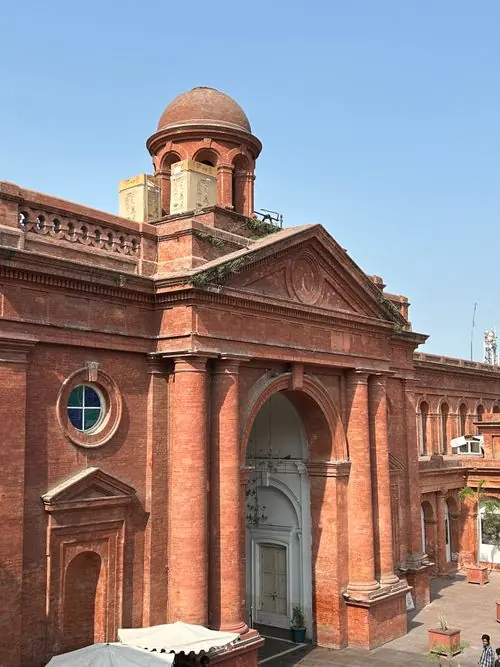
The honoured sites range from the red-brick colonnades of Islamia College Peshawar in Pakistan — founded in 1913 and restored over three years using traditional lime mortar, local brick and in-house carpentry — to a mud-brick mosque in Timbuktu, a timber townhouse in Kyoto, an azulejo-tiled facade in Lisbon and an Ottoman caravanserai in Türkiye.
“A model of restraint — conservation that honoured the building rather than redesigning it.”— From the jury citation
The jury, which included conservation architects from four countries, praised the winning projects for using traditional materials and techniques rather than modern shortcuts. The citation described the work collectively as “a model of restraint: conservation that honoured each building rather than redesigning it.”
Each award carries a grant for a second conservation phase. At Islamia College, officials said the funds will support work on the campus mosque and the historic library, whose reading room still holds its original furniture. Similar second phases are planned for the Timbuktu mosque’s courtyard and the Kyoto townhouse’s garden wall.
“These buildings have taught generations,” the college’s chief administrator said after receiving the award. “For once, we are simply returning the favour — one door, one arch, one brick at a time.”
All five sites remain open to visitors during designated hours, with guided walks of the restored areas offered on weekends. Find more protected wonders at the UNESCO World Heritage List, and our own guide to exploring the history on your own doorstep.