Sushi is the most travelled food in the world — a Tokyo street snack that became a global obsession, from conveyor belts in São Paulo to train-station fridges in Oslo. The professional version takes a decade to master. The home version, done with respect and a sharp knife, is entirely within reach in one evening.
What is sushi?
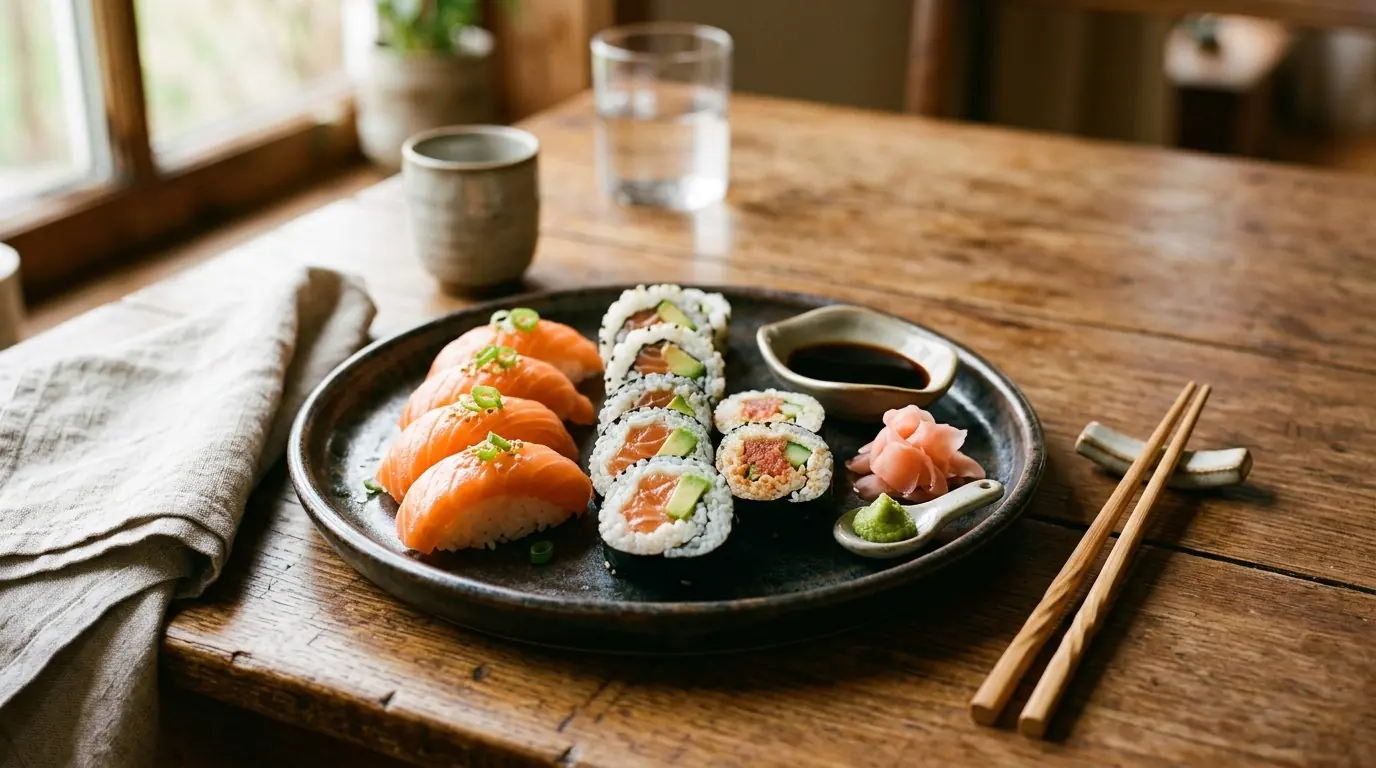
Sushi is not raw fish — that is sashimi. Sushi is seasoned rice: short-grain rice dressed with vinegar, salt and sugar, paired with fish, vegetables or egg. It was born as fast food in Edo (old Tokyo), where hand-pressed nigiri was served from street stalls within seconds of ordering. The family tree: nigiri (a finger of rice topped with a slice of fish), maki (rice and filling rolled in nori) and temaki (a hand-rolled cone).
Ingredients
Makes about 24 pieces (4 servings) · prep 45 min · rice cooling 30 min · assembly 20 min
- 500 g sushi rice (short grain)
- 60 ml rice vinegar
- 2 tbsp caster sugar
- 1 tsp fine salt
- 300 g sashimi-grade salmon or tuna
- 4 sheets nori (half-size)
- 1/2 cucumber, cut into matchsticks
- 1 ripe avocado, sliced
- Soy sauce, wasabi and pickled ginger, to serve
How to make sushi, step by step
- Wash the rice. Rinse in cold water until it runs almost clear — usually four or five changes. This removes surface starch and is the difference between glossy grains and glue.
- Cook the rice. Simmer with an equal volume of water, lid on, 10 minutes; rest off the heat 10 minutes more. Do not lift the lid to look.
- Season. Warm the vinegar with sugar and salt until dissolved. Turn the hot rice out into a wide bowl, drizzle the seasoning over, and fold with a slicing motion while fanning it cool. Aim for body temperature — sushi rice is never refrigerated before use.
- Slice the fish. With your sharpest knife, cut the salmon across the grain into strips about 8 cm long, 3 cm wide and 0.5 cm thick. One smooth draw per cut; sawing tears the flesh.
- Shape the nigiri. Keep a bowl of water with a splash of vinegar beside you. With wet hands, take 18–20 g of rice and gently press it into an oval — firm enough to hold, loose enough that it still breathes. Dab a whisper of wasabi on top, drape the fish over, press once.
- Roll the maki. Lay a nori sheet on a bamboo mat, shiny side down. Spread a thin layer of rice over two-thirds of it, leaving a bare strip at the top edge. Line cucumber, avocado and fish across the centre.
- Close the roll. Lift the mat from the near edge, roll up and over the filling, and squeeze gently along the length. Continue rolling to seal on the bare strip — a few grains of rice there act as glue.
- Slice. With a wet knife, cut the roll in half, stack the halves, and cut into eight pieces, wiping the blade between strokes.
- Serve. Arrange with pickled ginger beside, not on top of, the sushi. Soy sauce and wasabi on the side — dip fish-first, lightly.
“The fish is the expensive part; the rice is the important part. Master the rice and you are eighty percent a sushi cook.”
Rules that actually matter
- Sashimi-grade only. Ordinary supermarket salmon is not safe to eat raw. Ask your fishmonger, keep it cold, and use it the same day.
- Wet hands, wet knife. Dry hands and dry blades rip rice and fish alike.
- Press less than you think. Compressed sushi rice tastes dense; it should almost fall apart in the mouth.
- Room-temperature rice. Chilled rice hardens and dulls the flavour; season it, fan it, use it.
Keep travelling the dinner table: our tacos al pastor recipe and pad thai recipe run the same step-by-step treatment — the world’s famous foods, cooked properly at home.