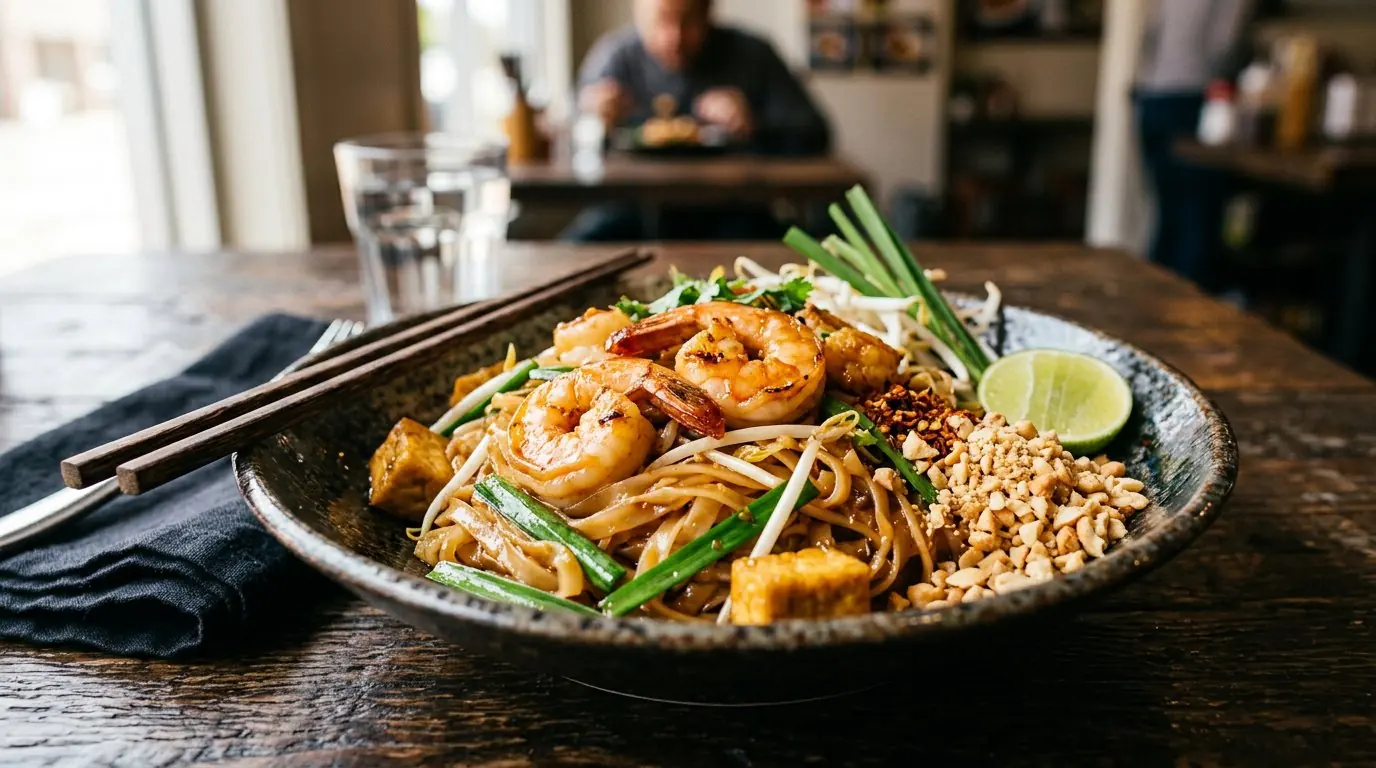
If Thailand had to send one dish to represent the whole country, it would send pad thai. Stir-fried rice noodles with tamarind, fish sauce and palm sugar — sour, salty and sweet in a single bite — it was promoted as the national dish in the 1930s and 40s, and it has been the world’s introduction to Thai cooking ever since. The street version is a ninety-second blaze in a carbon-black wok; this home version takes ten unhurried minutes and tastes about ninety percent as good.
What is pad thai?
Flat rice noodles stir-fried with egg, tofu, shrimp (or chicken), bean sprouts and garlic chives, dressed at the last moment with a tamarind sauce. There is no curry paste, no coconut milk and no chilli in the pan — the heat arrives afterwards, in the flakes and lime you add at the table. The dish lives or dies on the balance of the sauce: sour first, then salty, then sweet.
Ingredients
Makes 4 servings · prep 20 min · cooking 10 min
- 250 g flat rice noodles (about 5 mm wide)
- 3 tbsp tamarind paste
- 3 tbsp fish sauce
- 2–3 tbsp palm sugar (or brown sugar), grated
- 200 g raw shrimp, peeled (or chicken thigh, or extra firm tofu)
- 150 g firm tofu, cut into small cubes
- 2 eggs
- 3 garlic cloves and 2 shallots, finely chopped
- 2 tbsp vegetable oil
- A large handful of bean sprouts
- A handful of garlic chives (or spring onions), cut into 5 cm lengths
- 50 g roasted peanuts, roughly crushed
- 1 lime, cut into wedges · dried chilli flakes, to serve
How to make pad thai, step by step
- Soak the noodles. Cover the rice noodles in warm (not boiling) water for 20–30 minutes until pliable but still firm — they will finish cooking in the wok. Drain well. Soaked-soft noodles turn to mush when stir-fried.
- Mix the sauce. Warm the tamarind, fish sauce and palm sugar together until the sugar dissolves. Taste it: it should punch sour first, salty second, sweet third. Adjust — this is the whole dish.
- Prep everything else. Pad thai is a ten-minute sprint with no time to chop: eggs beaten, garlic and shallots minced, tofu cubed, sprouts and chives washed, peanuts crushed, all within reach of the stove.
- Get the wok hot. Heat the oil until it shimmers and the first wisp of smoke appears. Medium heat makes sad noodles.
- Aromatics and protein. Fry the garlic and shallots for 20 seconds, add the tofu and shrimp, and toss until the shrimp just turn pink.
- Eggs. Push everything up the side, crack the eggs into the empty space, scramble them until half-set, then fold them through the pan.
- Noodles and sauce. Add the noodles and pour the sauce over. Toss constantly for 2–3 minutes until the noodles drink the sauce and turn glossy. Splash in water only if they seize.
- Finish fresh. Kill the heat, fold in the bean sprouts and chives — they should stay crunchy — and half the peanuts.
- Serve immediately. Plate with lime wedges, the remaining peanuts and chilli flakes. Pad thai waits for no one either.
“A street vendor in Bangkok does this in ninety seconds. Your first attempt will take ten minutes and taste ninety percent as good — the missing ten percent is a thousand repetitions.”
Rules that actually matter
- The sauce is pre-mixed. You cannot balance three liquids mid-toss over a blazing wok.
- Under-soak the noodles. Pliable but firm going into the pan is perfect coming out of it.
- Cook in two batches if your wok is small. A crowded wok steams, and steamed pad thai is a different, sadder dish.
- The fresh bits stay fresh. Sprouts and chives go in off the heat, or not at all.
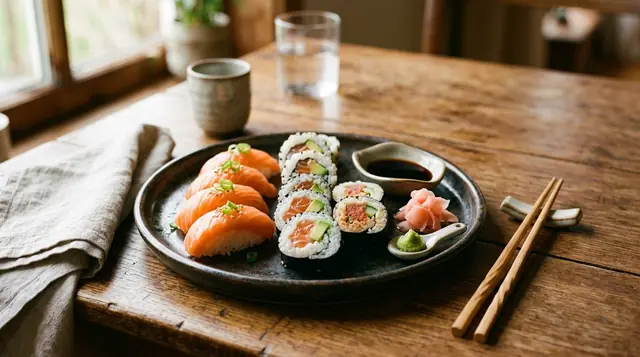
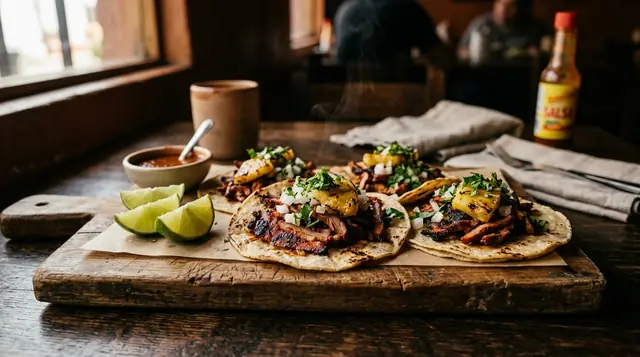
Keep travelling the dinner table: our homemade sushi recipe and tacos al pastor recipe run the same step-by-step treatment — the world’s famous foods, cooked properly at home.